
2025 AAAS Annual Meeting Panel
Saturday, February 15, 2025, 2:30 PM – 3:30 PM EST, Room 203 (Hynes Convention Center)
– Amanda Borth & Mahmud Farooque (Co-organizers); David Tomblin (Moderator)
Public engagement in science (PES) is no longer an afterthought. Public and philanthropic funders increasingly mandate that research and development projects also advance public value goals for increasing equity and ensuring procedural, recognitional, and intergenerational justice. PES scholars and practitioners are reinventing public engagement by developing new methods for including affected communities, regional stakeholders, and even national publics in co-designing and co-producing better socio-technical outcomes. This session featured three early career transdisciplinary exemplars and recent experiments in public engagement design that flips the script: starting with the “socio” instead of the “technical.” Presenters focused on the application of “open-frame” pre-deliberative engagement in the case of self-driving cars, nuclear waste storage, and fusion technology development in the design of deliberative public forums. Developed through a learning exchange between the Kettering Foundation and the Consortium for Science, Policy and Outcome, open frame dialogues empower participants to articulate their own concerns, hopes, and priorities, thereby revealing underlying tensions and issues missed by experts. When done at scale and connected with distributed and democratic decision-making, these engagements help anticipate and align technology development trajectories with public needs and values precisely when such alignment can ensure better societal outcomes.


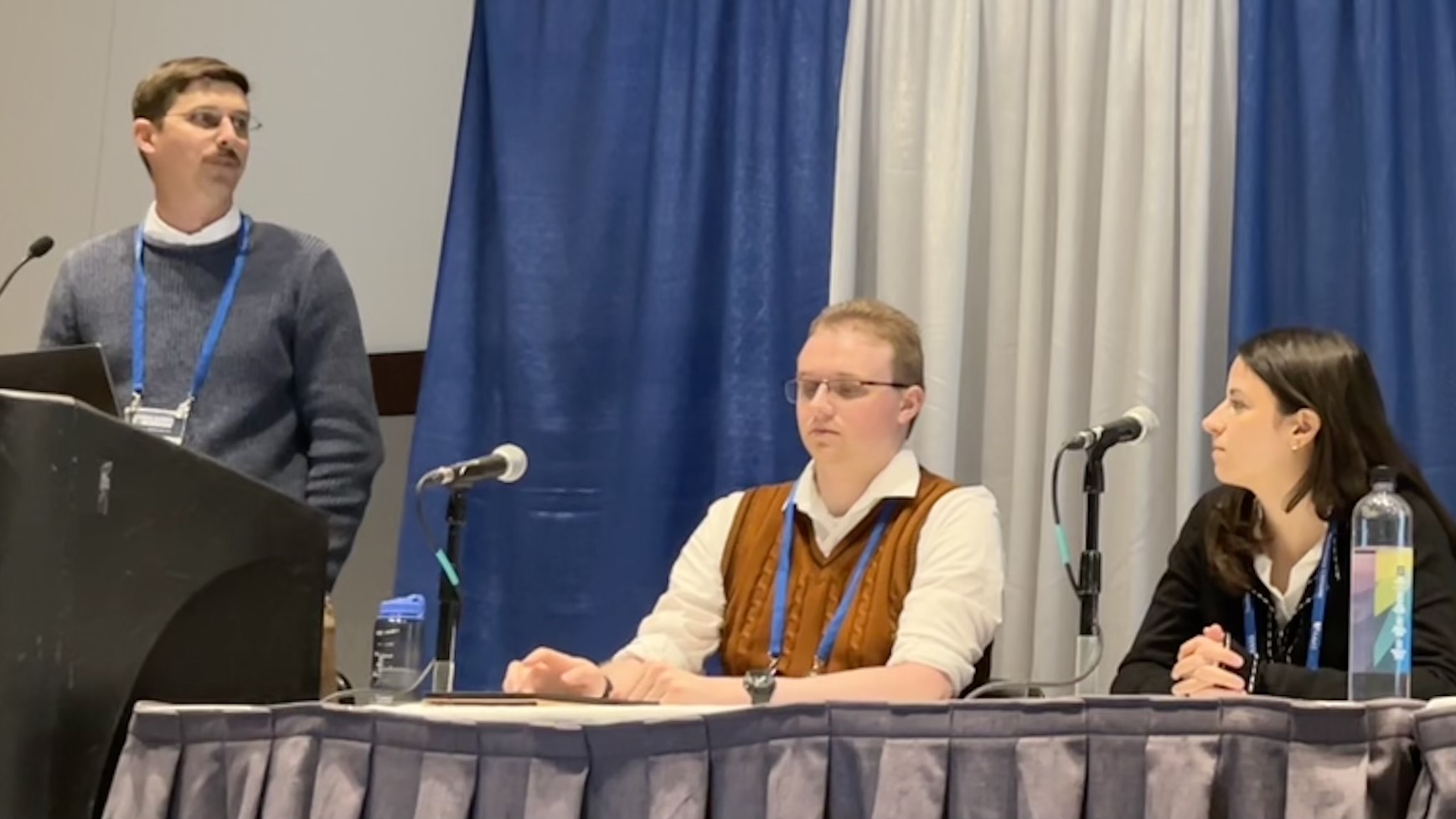


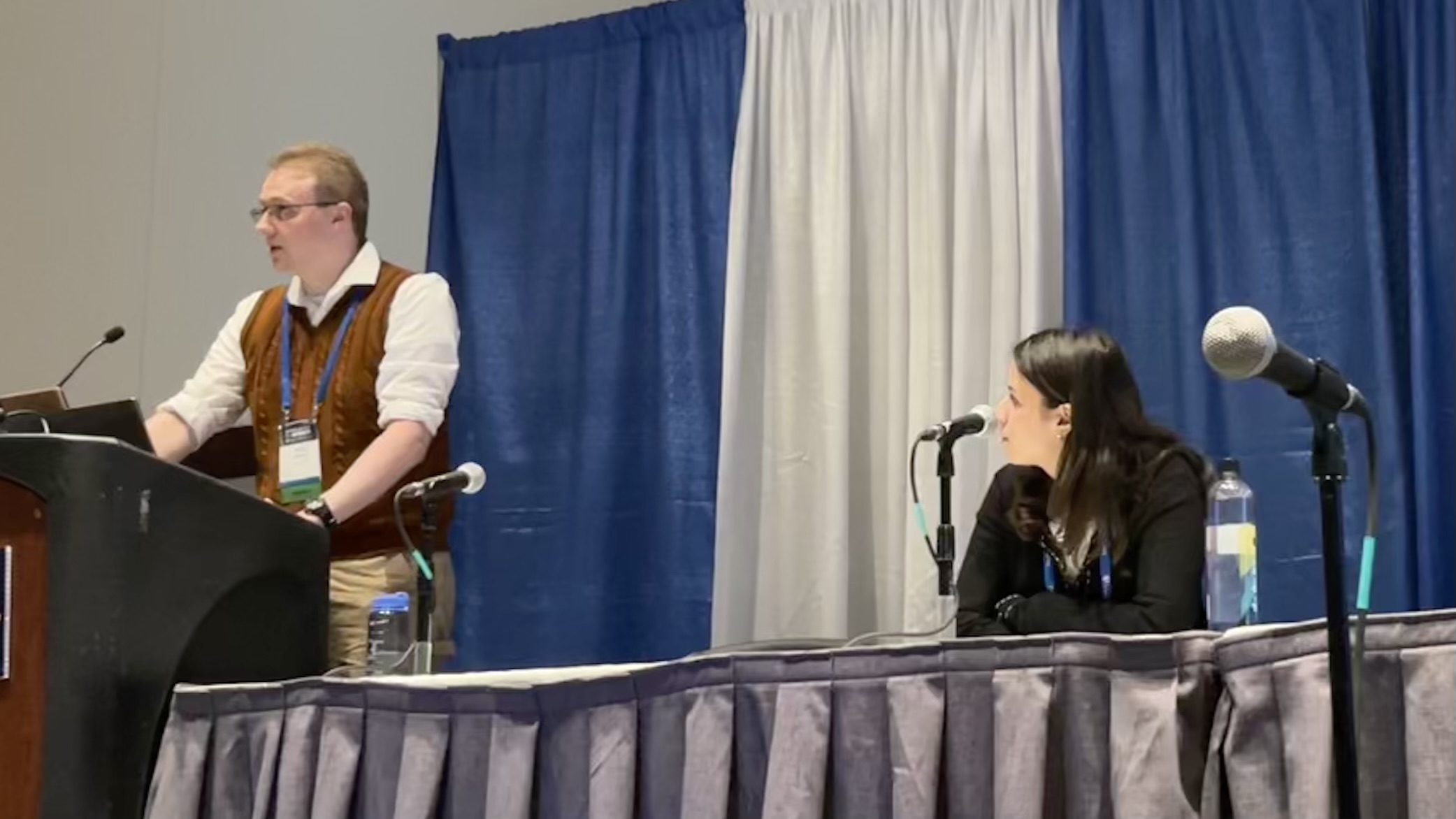


Developing a Process for Centralizing Community Values in Nuclear Waste Siting
– Nicholas Weller, School for the Future of Innovation in Society, Arizona State University, Tempe, AZ
Historically, community values have largely been ignored in nuclear waste siting activities or lack thereof. The Department of Energy’s Consortia for Consent-Based Siting is rewriting this norm by innovating ways to uncover and centralize community values in nuclear waste siting decisions. This work iteratively tests and innovates methods for effectively eliciting community perspectives toward energy siting in order to inform future consent-based siting activities for nuclear waste.
Exploring Distributive Justice in AV Deployment Across the Rural-Urban Divide
– Alexa Panati, Georgetown University, Washington, D.C.
Historically, the gap in technological diffusion between rural and urban areas has widened with emerging technologies. Thus, potential widespread autonomous vehicle deployment makes questions of distributive justice difficult to ignore. Speakers conducted two dialogues in rural and urban Maryland and qualitatively coded all data with a distributive justice framework to discover potential challenges of autonomous vehicle deployment that risk widening the gap in technological diffusion across the rural-urban divide.
Nuclear Fusion and You: Through the Looking Glass Into Public Perspectives
– Jared Owens, College of Engineering, University of Michigan, Ann Arbor, MI
Between the White House’s Bold Vision for Commercial Fusion Energy, growing private sector investments, and recent scientific and engineering breakthroughs, the race for fusion energy is heating up. Yet little is known about US perspectives on this prospective energy technology. Through qualitative analysis of public perspectives gathered in hands-on community dialogues, we have developed an early snapshot of public standings and what they may mean for the long-awaited technology.
 Expert & Citizen Assessment of Science & Technology